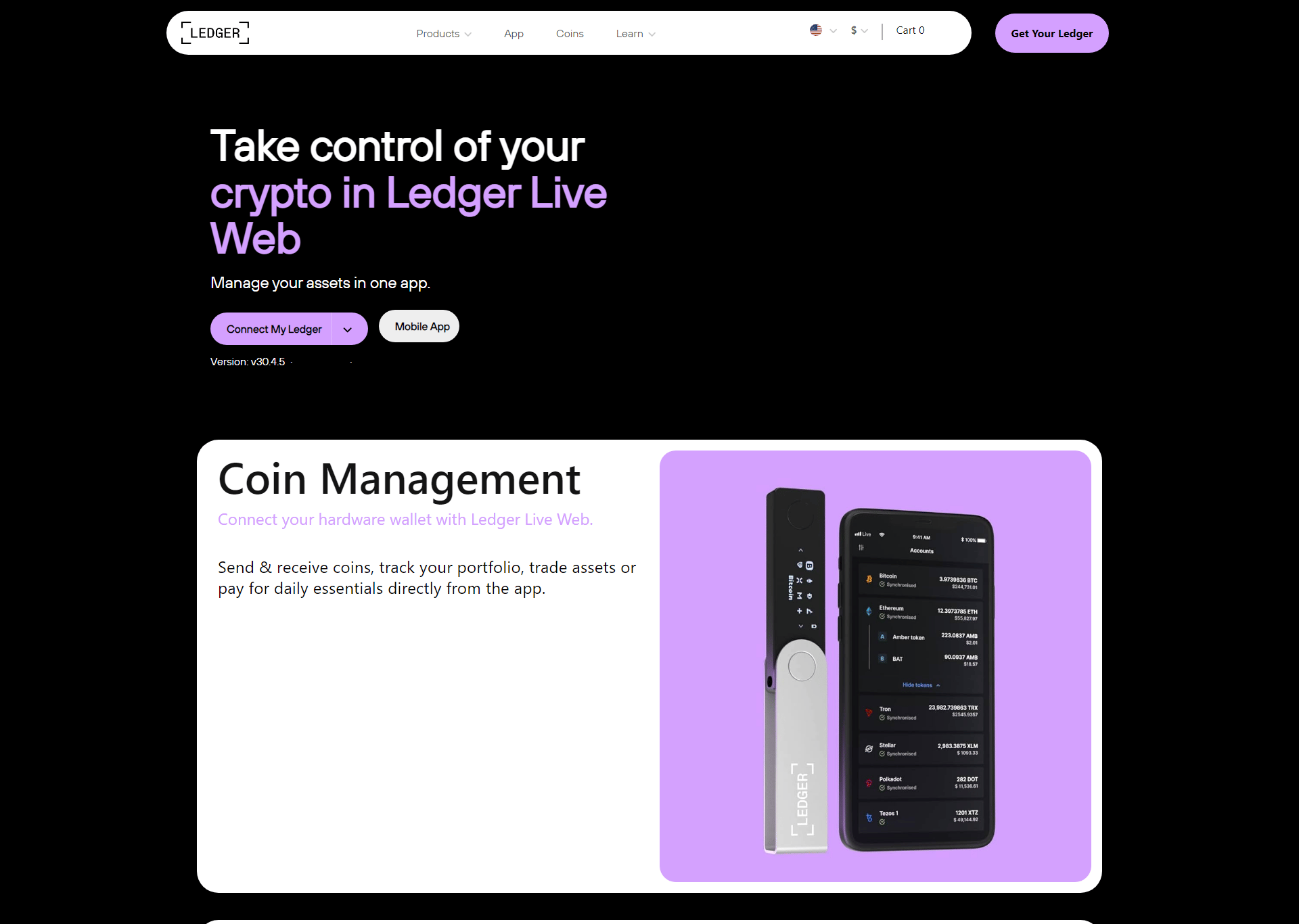
Ledger.com/start Guide: How to Build Better Habits for Crypto Wallet Security
Cryptocurrency ownership comes with the responsibility of protecting wallet access and checking every transaction carefully. A hardware wallet can help protect private keys, but users still need to understand how their device works and how to recognize suspicious activity.For people beginning with a compatible Ledger device, Ledger.com/start provides a useful place to find setup instructions. Beyond initial configuration, learning how to maintain the wallet is equally important. This article covers the setup journey and the habits that support responsible crypto management.
Start by identifying the Ledger hardware wallet model you own. Visit Ledger.com/start by typing the address directly into your browser and checking that the domain is correct.Find the instructions for your specific device. Different models may have different controls, connection options, and supported features.Avoid using unofficial setup pages or downloading applications through unexpected links. Fraudulent websites may imitate genuine wallet pages and request sensitive information.
Before connecting your device, prepare a trusted computer or compatible mobile device. Use a reliable internet connection and choose a private workspace.Keep your hardware wallet and required accessories nearby. You should also have a suitable offline method for recording your recovery phrase.Take a moment to inspect your device. If the hardware appears damaged or modified, do not continue until you have checked the situation through verified Ledger support resources.
Use the connection method recommended for your Ledger model. Follow the on-device instructions and check that the compatible application recognizes the hardware wallet.If an unexpected message appears, stop and investigate rather than approving it automatically.
Ledger Live is used for many supported account-management activities. If it is part of your setup, download it through verified Ledger sources.Check the application details before installation. Avoid unofficial software packages, suspicious browser extensions, and remote-access tools offered by unknown people.
Create a PIN using the instructions displayed on your hardware wallet. Choose a code that is not easy to predict and keep it confidential.Your PIN helps protect access to the physical device. It should never be shared through email, chat, or support conversations.
Your recovery phrase is essential for restoring wallet access if your device becomes unavailable.During the creation of a new wallet, carefully write down the words displayed on your device. Preserve their exact order and check your record before putting it away.Store the phrase offline in a secure location. Do not save it in a phone note, cloud document, email account, or screenshot.Be especially cautious of people who claim they need your recovery phrase to verify, synchronize, unlock, or repair your wallet. Such requests are dangerous. Genuine support should never need these words.
After setup, open the supported companion application and become familiar with its account-management features.Ledger Live can display compatible accounts, supported assets, and transaction history. Review the information carefully and learn how your selected networks operate.If you manage multiple cryptocurrencies, organize your accounts so that you can identify each asset and its associated network. Check current compatibility information before making changes.
A repeatable verification routine can help reduce errors.Before sending: Confirm the recipient address and selected network.While preparing: Check the amount and displayed transaction fees.Before approving: Compare the transaction details with the information displayed on your Ledger device.After submitting: Review the transaction status using an appropriate blockchain explorer or supported application.For an unfamiliar destination, a small test transaction may help confirm that the address and network are correct. Remember that blockchain transfers are generally irreversible.
A secure setup does not make a wallet immune to scams. Users should remain alert to phishing websites, fake support profiles, unexpected software downloads, and messages that create urgency.Be careful with claims that your wallet will be disabled unless you immediately verify your recovery phrase. Do not follow instructions from strangers who ask to control your computer remotely.Keep your applications updated through verified sources and review important actions before confirming them.
Can I use Ledger Live without checking my hardware wallet?
You should review important transaction information directly on your hardware wallet before approving it. Do not rely only on the computer or phone display.
Review your device, software, recovery backup, and security habits regularly. Check updates through verified sources and remain alert to suspicious requests.
Responsible crypto management involves more than completing the first configuration screen. Ledger.com/start helps users begin setting up a compatible Ledger hardware wallet, while good security habits help maintain protection over time. Use verified software, keep recovery information offline, and carefully review every transaction on your device. A consistent routine can make managing digital assets more organized and secure.
{"docsConfig":{"theme":"mint","$schema":"https://mintlify.com/docs.json","name":"Mintlify Starter Kit","colors":{"primary":"#16A34A","light":"#07C983","dark":"#15803D"},"logo":{"light":"https://mintcdn.com/live-ledgerstart/3BLsod7ZWOsqy5HY/logo/light.svg?fit=max\u0026auto=format\u0026n=3BLsod7ZWOsqy5HY\u0026q=85\u0026s=9e11e986b9ace85efeeeb0b4406283b7","dark":"https://mintcdn.com/live-ledgerstart/3BLsod7ZWOsqy5HY/logo/dark.svg?fit=max\u0026auto=format\u0026n=3BLsod7ZWOsqy5HY\u0026q=85\u0026s=f9b2186086b91965aa3277126a67ebba"},"favicon":"https://mintcdn.com/live-ledgerstart/3BLsod7ZWOsqy5HY/favicon.svg?fit=max\u0026auto=format\u0026n=3BLsod7ZWOsqy5HY\u0026q=85\u0026s=273715e4214e22c0f7b823ed29f8eec2","navbar":{"links":[{"href":"mailto:support@mintlify.com","label":"Support"}],"primary":{"type":"button","label":"Dashboard","href":"https://app.mintlify.com"}},"footer":{"socials":{"x":"https://x.com/mintlify","github":"https://github.com/mintlify","linkedin":"https://linkedin.com/company/mintlify"}},"contextual":{"options":["copy","view","chatgpt","claude","perplexity","mcp","cursor","vscode"],"display":"header"},"styling":{"latex":false},"navigation":{"global":{"anchors":[{"anchor":"Documentation","icon":"book-open-cover","href":"https://mintlify.com/docs"},{"anchor":"Blog","icon":"newspaper","href":"https://mintlify.com/blog"}]},"pages":[]}},"deployment":{"deploymentMetadataValue":{"subdomain":"live-ledgerstart","hasAudioNarration":false,"actualSubdomain":"live-ledgerstart","customDomains":[],"gitSource":{"type":"artifacts","owner":"prod","repo":"6aeadcd6bd9c07422e0da399","deployBranch":"main","contentDirectory":"","isPrivate":true,"mountPath":"","label":"","_id":"6aeade9803363d57df28500b"},"chroma":{"latestBuiltDeploymentHistoryId":"6aeade9903363d57df28501a","collectionId":"063c3ebd-e982-4dfc-85d6-9aad66ee0801","liveDeploymentHistoryId":"6aeade9903363d57df28501a","schemaVersion":"v3"},"entitlements":{"AI_CHAT":{"status":"ENABLED"},"WEB_MCP":{"status":"ENABLED"},"NARRATION":{"status":"ENABLED"}},"buildId":"6aeae521d631966e58b4be3d","clientVersion":"0.0.4054","searchFilterCounts":[{"language":"default","tag":"Getting Started","count":2}]},"assistantConfig":{"enableAskAiButton":false,"enableStarterQuestions":false,"enableContextualStarterQuestions":false,"enableAskAiSearchBar":true},"basePath":"","hasChatPermissions":true,"hasWebMcpPermissions":true,"toggles":[{"name":"kill-isr","enabled":true,"variant":{"name":"disabled","enabled":false,"feature_enabled":true},"impressionData":false},{"name":"agent-mintlify-slack","enabled":true,"variant":{"name":"disabled","enabled":false,"feature_enabled":true},"impressionData":false},{"name":"agent-integrations-settings","enabled":true,"variant":{"name":"disabled","enabled":false,"feature_enabled":true},"impressionData":false},{"name":"rbac-expansion","enabled":true,"variant":{"name":"disabled","enabled":false,"feature_enabled":true},"impressionData":false},{"name":"automations-pr-grouping","enabled":true,"variant":{"name":"disabled","enabled":false,"feature_enabled":true},"impressionData":false},{"name":"custom-prefix","enabled":true,"variant":{"name":"disabled","enabled":false,"feature_enabled":true},"impressionData":false},{"name":"analytics-v7","enabled":true,"variant":{"name":"disabled","enabled":false,"feature_enabled":true},"impressionData":false},{"name":"user-flows-analytics","enabled":true,"variant":{"name":"disabled","enabled":false,"feature_enabled":true},"impressionData":false},{"name":"no-publish-flow","enabled":true,"variant":{"name":"disabled","enabled":false,"feature_enabled":true},"impressionData":false},{"name":"workos-onboarding","enabled":true,"variant":{"name":"disabled","enabled":false,"feature_enabled":true},"impressionData":false},{"name":"llms-txt-v2","enabled":true,"variant":{"name":"disabled","enabled":false,"feature_enabled":true},"impressionData":false},{"name":"snapshot-serving-live","enabled":true,"variant":{"name":"disabled","enabled":false,"feature_enabled":true},"impressionData":false},{"name":"stripTemperatureMiddleware","enabled":true,"variant":{"name":"disabled","enabled":false,"feature_enabled":true},"impressionData":false},{"name":"support-platform-pylon-zendesk","enabled":true,"variant":{"name":"disabled","enabled":false,"feature_enabled":true},"impressionData":false},{"name":"snapshot-serving","enabled":true,"variant":{"name":"disabled","enabled":false,"feature_enabled":true},"impressionData":false},{"name":"instant-rollback","enabled":true,"variant":{"name":"disabled","enabled":false,"feature_enabled":true},"impressionData":false},{"name":"granular-notifications-server","enabled":true,"variant":{"name":"disabled","enabled":false,"feature_enabled":true},"impressionData":false},{"name":"granular-notifications","enabled":true,"variant":{"name":"disabled","enabled":false,"feature_enabled":true},"impressionData":false},{"name":"automations-fable","enabled":true,"variant":{"name":"disabled","enabled":false,"feature_enabled":true},"impressionData":false},{"name":"fixed-ai-action-pricing","enabled":true,"variant":{"name":"disabled","enabled":false,"feature_enabled":true},"impressionData":false},{"name":"automation-resolve-merge-conflict","enabled":true,"variant":{"name":"disabled","enabled":false,"feature_enabled":true},"impressionData":false},{"name":"scoped-publishing","enabled":true,"variant":{"name":"disabled","enabled":false,"feature_enabled":true},"impressionData":false},{"name":"mintql","enabled":true,"variant":{"name":"disabled","enabled":false,"feature_enabled":true},"impressionData":false},{"name":"page-level-analytics","enabled":true,"variant":{"name":"disabled","enabled":false,"feature_enabled":true},"impressionData":false},{"name":"editor-version-history-v2","enabled":true,"variant":{"name":"disabled","enabled":false,"feature_enabled":true},"impressionData":false},{"name":"billing-page-v2","enabled":true,"variant":{"name":"disabled","enabled":false,"feature_enabled":true},"impressionData":false},{"name":"full-page-search","enabled":true,"variant":{"name":"disabled","enabled":false,"feature_enabled":true},"impressionData":false},{"name":"workspace-projects","enabled":true,"variant":{"name":"disabled","enabled":false,"feature_enabled":true},"impressionData":false},{"name":"assistant-v5","enabled":true,"variant":{"name":"disabled","enabled":false,"feature_enabled":true},"impressionData":false},{"name":"fork-pr-previews","enabled":true,"variant":{"name":"disabled","enabled":false,"feature_enabled":true},"impressionData":false},{"name":"revalidation-jwt","enabled":true,"variant":{"name":"disabled","enabled":false,"feature_enabled":true},"impressionData":false},{"name":"vite-origin","enabled":true,"variant":{"name":"disabled","enabled":false,"feature_enabled":true},"impressionData":false},{"name":"workos-sso-scim","enabled":true,"variant":{"name":"disabled","enabled":false,"feature_enabled":true},"impressionData":false},{"name":"hobby-abuse-scan","enabled":true,"variant":{"name":"disabled","enabled":false,"feature_enabled":true},"impressionData":false},{"name":"dashboard-inbox","enabled":true,"variant":{"name":"disabled","enabled":false,"feature_enabled":true},"impressionData":false},{"name":"workos-signup","enabled":true,"variant":{"name":"disabled","enabled":false,"feature_enabled":true},"impressionData":false},{"name":"turbopuffer-dual-write","enabled":true,"variant":{"name":"disabled","enabled":false,"feature_enabled":true},"impressionData":false},{"name":"workos-enabled","enabled":true,"variant":{"name":"disabled","enabled":false,"feature_enabled":true},"impressionData":false},{"name":"approve-review-flow","enabled":true,"variant":{"name":"disabled","enabled":false,"feature_enabled":true},"impressionData":false},{"name":"sso-setup-deadline-banner","enabled":true,"variant":{"name":"disabled","enabled":false,"feature_enabled":true},"impressionData":false},{"name":"turbopuffer-serve","enabled":true,"variant":{"name":"disabled","enabled":false,"feature_enabled":true},"impressionData":false}],"googleFontsInlined":false},"customCss":[],"page":{"pagePath":"en-start","slug":"/en-start","pageMetadata":{"title":"Ledger.com/Start®| Getting Started — Ledger Support™","description":null,"href":"/en-start"},"pageType":"default","mdx":{"mdxSource":{"compiledSource":"\"use strict\";const{Fragment:_Fragment,jsx:_jsx,jsxs:_jsxs}=arguments[0];const{useMDXComponents:_provideComponents}=arguments[0];function _createMdxContent(props){const _components={a:`a`,p:`p`,strong:`strong`,..._provideComponents(),...props.components},{Heading,OptimizedImage}=_components;if(!Heading)_missingMdxReference(`Heading`,true);if(!OptimizedImage)_missingMdxReference(`OptimizedImage`,true);return _jsxs(_Fragment,{children:[_jsxs(_components.p,{children:[_jsx(_components.a,{href:`http://Ledger.com/start`,children:`Ledger.com/start`}),` introduces hardware wallet essentials, helping users explore device features, wallet compatibility, recovery planning, and cryptocurrency protection.`]}),`\n`,_jsx(OptimizedImage,{src:`https://mintcdn.com/live-ledgerstart/3N3yqZGyPv2yi9gT/images/gffg.png?fit=max\u0026auto=format\u0026n=3N3yqZGyPv2yi9gT\u0026q=85\u0026s=409d60d9c81aa20fa7b4ec642df6b053`,alt:`Gffg`,\"data-og-width\":`1920`,width:`1920`,\"data-og-height\":`1366`,height:`1366`,\"data-path\":`images/gffg.png`,\"data-optimize\":`true`,\"data-opv\":`3`,srcset:`https://mintcdn.com/live-ledgerstart/3N3yqZGyPv2yi9gT/images/gffg.png?w=280\u0026fit=max\u0026auto=format\u0026n=3N3yqZGyPv2yi9gT\u0026q=85\u0026s=38225c4f0ec1b9a75095735ccba4a076 280w, https://mintcdn.com/live-ledgerstart/3N3yqZGyPv2yi9gT/images/gffg.png?w=560\u0026fit=max\u0026auto=format\u0026n=3N3yqZGyPv2yi9gT\u0026q=85\u0026s=18b4609b250f32c640f4c099f8b92506 560w, https://mintcdn.com/live-ledgerstart/3N3yqZGyPv2yi9gT/images/gffg.png?w=840\u0026fit=max\u0026auto=format\u0026n=3N3yqZGyPv2yi9gT\u0026q=85\u0026s=f12c00434ec66e7d9f011671dc0341ef 840w, https://mintcdn.com/live-ledgerstart/3N3yqZGyPv2yi9gT/images/gffg.png?w=1100\u0026fit=max\u0026auto=format\u0026n=3N3yqZGyPv2yi9gT\u0026q=85\u0026s=e9422aa201811849a2a13b5042d6a6f4 1100w, https://mintcdn.com/live-ledgerstart/3N3yqZGyPv2yi9gT/images/gffg.png?w=1650\u0026fit=max\u0026auto=format\u0026n=3N3yqZGyPv2yi9gT\u0026q=85\u0026s=66312653bd82bfe5d42510c55834dae5 1650w, https://mintcdn.com/live-ledgerstart/3N3yqZGyPv2yi9gT/images/gffg.png?w=2500\u0026fit=max\u0026auto=format\u0026n=3N3yqZGyPv2yi9gT\u0026q=85\u0026s=bda9ef5853a8eab73e60119c47bb6790 2500w`}),`\n`,_jsxs(Heading,{level:`1`,id:`ledger-com/start-guide-how-to-build-better-habits-for-crypto-wallet-security`,children:[_jsx(_components.a,{href:`http://Ledger.com/start`,children:`Ledger.com/start`}),` Guide: How to Build Better Habits for Crypto Wallet Security`]}),`\n`,_jsx(_components.p,{children:`Cryptocurrency ownership comes with the responsibility of protecting wallet access and checking every transaction carefully. A hardware wallet can help protect private keys, but users still need to understand how their device works and how to recognize suspicious activity.`}),`\n`,_jsxs(_components.p,{children:[`For people beginning with a compatible Ledger device, `,_jsx(_components.a,{href:`http://Ledger.com/start`,children:_jsx(_components.strong,{children:`Ledger.com/start`})}),` provides a useful place to find setup instructions. Beyond initial configuration, learning how to maintain the wallet is equally important. This article covers the setup journey and the habits that support responsible crypto management.`]}),`\n`,_jsxs(Heading,{level:`2`,id:`begin-with-the-correct-ledger-com/start-resource`,children:[`Begin With the Correct `,_jsx(_components.a,{href:`http://Ledger.com/start`,children:`Ledger.com/start`}),` Resource`]}),`\n`,_jsxs(_components.p,{children:[`Start by identifying the Ledger hardware wallet model you own. Visit `,_jsx(_components.a,{href:`http://Ledger.com/start`,children:`Ledger.com/start`}),` by typing the address directly into your browser and checking that the domain is correct.`]}),`\n`,_jsx(_components.p,{children:`Find the instructions for your specific device. Different models may have different controls, connection options, and supported features.`}),`\n`,_jsx(_components.p,{children:`Avoid using unofficial setup pages or downloading applications through unexpected links. Fraudulent websites may imitate genuine wallet pages and request sensitive information.`}),`\n`,_jsx(Heading,{level:`2`,id:`create-a-safe-setup-environment`,children:`Create a Safe Setup Environment`}),`\n`,_jsx(_components.p,{children:`Before connecting your device, prepare a trusted computer or compatible mobile device. Use a reliable internet connection and choose a private workspace.`}),`\n`,_jsx(_components.p,{children:`Keep your hardware wallet and required accessories nearby. You should also have a suitable offline method for recording your recovery phrase.`}),`\n`,_jsx(_components.p,{children:`Take a moment to inspect your device. If the hardware appears damaged or modified, do not continue until you have checked the situation through verified Ledger support resources.`}),`\n`,_jsx(Heading,{level:`2`,id:`configure-your-hardware-wallet-step-by-step`,children:`Configure Your Hardware Wallet Step by Step`}),`\n`,_jsx(Heading,{level:`3`,id:`connect-the-device`,children:`Connect the Device`}),`\n`,_jsx(_components.p,{children:`Use the connection method recommended for your Ledger model. Follow the on-device instructions and check that the compatible application recognizes the hardware wallet.`}),`\n`,_jsx(_components.p,{children:`If an unexpected message appears, stop and investigate rather than approving it automatically.`}),`\n`,_jsx(Heading,{level:`3`,id:`download-compatible-software`,children:`Download Compatible Software`}),`\n`,_jsx(_components.p,{children:`Ledger Live is used for many supported account-management activities. If it is part of your setup, download it through verified Ledger sources.`}),`\n`,_jsx(_components.p,{children:`Check the application details before installation. Avoid unofficial software packages, suspicious browser extensions, and remote-access tools offered by unknown people.`}),`\n`,_jsx(Heading,{level:`3`,id:`set-your-pin`,children:`Set Your PIN`}),`\n`,_jsx(_components.p,{children:`Create a PIN using the instructions displayed on your hardware wallet. Choose a code that is not easy to predict and keep it confidential.`}),`\n`,_jsx(_components.p,{children:`Your PIN helps protect access to the physical device. It should never be shared through email, chat, or support conversations.`}),`\n`,_jsx(Heading,{level:`2`,id:`make-recovery-information-a-priority`,children:`Make Recovery Information a Priority`}),`\n`,_jsx(_components.p,{children:`Your recovery phrase is essential for restoring wallet access if your device becomes unavailable.`}),`\n`,_jsx(_components.p,{children:`During the creation of a new wallet, carefully write down the words displayed on your device. Preserve their exact order and check your record before putting it away.`}),`\n`,_jsx(_components.p,{children:`Store the phrase offline in a secure location. Do not save it in a phone note, cloud document, email account, or screenshot.`}),`\n`,_jsx(_components.p,{children:`Be especially cautious of people who claim they need your recovery phrase to verify, synchronize, unlock, or repair your wallet. Such requests are dangerous. Genuine support should never need these words.`}),`\n`,_jsx(Heading,{level:`2`,id:`learn-to-review-your-crypto-accounts`,children:`Learn to Review Your Crypto Accounts`}),`\n`,_jsx(_components.p,{children:`After setup, open the supported companion application and become familiar with its account-management features.`}),`\n`,_jsx(_components.p,{children:`Ledger Live can display compatible accounts, supported assets, and transaction history. Review the information carefully and learn how your selected networks operate.`}),`\n`,_jsx(_components.p,{children:`If you manage multiple cryptocurrencies, organize your accounts so that you can identify each asset and its associated network. Check current compatibility information before making changes.`}),`\n`,_jsx(Heading,{level:`2`,id:`build-a-reliable-transaction-routine`,children:`Build a Reliable Transaction Routine`}),`\n`,_jsx(_components.p,{children:`A repeatable verification routine can help reduce errors.`}),`\n`,_jsxs(_components.p,{children:[_jsx(_components.strong,{children:`Before sending:`}),` Confirm the recipient address and selected network.`]}),`\n`,_jsxs(_components.p,{children:[_jsx(_components.strong,{children:`While preparing:`}),` Check the amount and displayed transaction fees.`]}),`\n`,_jsxs(_components.p,{children:[_jsx(_components.strong,{children:`Before approving:`}),` Compare the transaction details with the information displayed on your Ledger device.`]}),`\n`,_jsxs(_components.p,{children:[_jsx(_components.strong,{children:`After submitting:`}),` Review the transaction status using an appropriate blockchain explorer or supported application.`]}),`\n`,_jsx(_components.p,{children:`For an unfamiliar destination, a small test transaction may help confirm that the address and network are correct. Remember that blockchain transfers are generally irreversible.`}),`\n`,_jsx(Heading,{level:`2`,id:`recognize-common-wallet-security-threats`,children:`Recognize Common Wallet Security Threats`}),`\n`,_jsx(_components.p,{children:`A secure setup does not make a wallet immune to scams. Users should remain alert to phishing websites, fake support profiles, unexpected software downloads, and messages that create urgency.`}),`\n`,_jsx(_components.p,{children:`Be careful with claims that your wallet will be disabled unless you immediately verify your recovery phrase. Do not follow instructions from strangers who ask to control your computer remotely.`}),`\n`,_jsx(_components.p,{children:`Keep your applications updated through verified sources and review important actions before confirming them.`}),`\n`,_jsx(Heading,{level:`2`,id:`frequently-asked-questions`,children:`Frequently Asked Questions`}),`\n`,_jsxs(Heading,{level:`3`,id:`does-ledger-com/start-help-with-first-time-setup`,children:[`Does `,_jsx(_components.a,{href:`http://Ledger.com/start`,children:`Ledger.com/start`}),` help with first-time setup?`]}),`\n`,_jsx(_components.p,{children:`Yes. It is a starting point for finding configuration instructions and information for compatible Ledger devices.`}),`\n`,_jsx(Heading,{level:`3`,id:`what-is-the-difference-between-a-pin-and-a-recovery-phrase`,children:`What is the difference between a PIN and a recovery phrase?`}),`\n`,_jsx(_components.p,{children:`A PIN helps protect access to the physical device. A recovery phrase can be used to restore wallet access. Both should remain private.`}),`\n`,_jsx(Heading,{level:`3`,id:`can-i-use-ledger-live-without-checking-my-hardware-wallet`,children:`Can I use Ledger Live without checking my hardware wallet?`}),`\n`,_jsx(_components.p,{children:`You should review important transaction information directly on your hardware wallet before approving it. Do not rely only on the computer or phone display.`}),`\n`,_jsx(Heading,{level:`3`,id:`how-often-should-i-review-my-wallet-security`,children:`How often should I review my wallet security?`}),`\n`,_jsx(_components.p,{children:`Review your device, software, recovery backup, and security habits regularly. Check updates through verified sources and remain alert to suspicious requests.`}),`\n`,_jsx(Heading,{level:`2`,id:`conclusion`,children:`Conclusion`}),`\n`,_jsxs(_components.p,{children:[`Responsible crypto management involves more than completing the first configuration screen. `,_jsx(_components.a,{href:`http://Ledger.com/start`,children:_jsx(_components.strong,{children:`Ledger.com/start`})}),` helps users begin setting up a compatible Ledger hardware wallet, while good security habits help maintain protection over time. Use verified software, keep recovery information offline, and carefully review every transaction on your device. A consistent routine can make managing digital assets more organized and secure.`]})]})}function MDXContent(props={}){const{wrapper:MDXLayout}={..._provideComponents(),...props.components};return MDXLayout?_jsx(MDXLayout,{...props,children:_jsx(_createMdxContent,{...props})}):_createMdxContent(props)}return{default:MDXContent};function _missingMdxReference(id,component){throw new Error(`Expected `+(component?`component`:`object`)+\" `\"+id+\"` to be defined: you likely forgot to import, pass, or provide it.\")}","frontmatter":{},"scope":{"config":{},"pageMetadata":{"title":"Ledger.com/Start®| Getting Started — Ledger Support™","description":null,"href":"/en-start"}}},"mdxSourceWithNoJs":null},"mdxExtracts":{"tableOfContents":[{"title":"Ledger.com/start Guide: How to Build Better Habits for Crypto Wallet Security","slug":"ledger-com/start-guide-how-to-build-better-habits-for-crypto-wallet-security","depth":1,"children":[]},{"title":"Begin With the Correct Ledger.com/start Resource","slug":"begin-with-the-correct-ledger-com/start-resource","depth":2,"children":[]},{"title":"Create a Safe Setup Environment","slug":"create-a-safe-setup-environment","depth":2,"children":[]},{"title":"Configure Your Hardware Wallet Step by Step","slug":"configure-your-hardware-wallet-step-by-step","depth":2,"children":[{"title":"Connect the Device","slug":"connect-the-device","depth":3,"children":[]},{"title":"Download Compatible Software","slug":"download-compatible-software","depth":3,"children":[]},{"title":"Set Your PIN","slug":"set-your-pin","depth":3,"children":[]}]},{"title":"Make Recovery Information a Priority","slug":"make-recovery-information-a-priority","depth":2,"children":[]},{"title":"Learn to Review Your Crypto Accounts","slug":"learn-to-review-your-crypto-accounts","depth":2,"children":[]},{"title":"Build a Reliable Transaction Routine","slug":"build-a-reliable-transaction-routine","depth":2,"children":[]},{"title":"Recognize Common Wallet Security Threats","slug":"recognize-common-wallet-security-threats","depth":2,"children":[]},{"title":"Frequently Asked Questions","slug":"frequently-asked-questions","depth":2,"children":[{"title":"Does Ledger.com/start help with first-time setup?","slug":"does-ledger-com/start-help-with-first-time-setup","depth":3,"children":[]},{"title":"What is the difference between a PIN and a recovery phrase?","slug":"what-is-the-difference-between-a-pin-and-a-recovery-phrase","depth":3,"children":[]},{"title":"Can I use Ledger Live without checking my hardware wallet?","slug":"can-i-use-ledger-live-without-checking-my-hardware-wallet","depth":3,"children":[]},{"title":"How often should I review my wallet security?","slug":"how-often-should-i-review-my-wallet-security","depth":3,"children":[]}]},{"title":"Conclusion","slug":"conclusion","depth":2,"children":[]}],"codeExamples":{}},"jsLinks":[],"subdomain":"live-ledgerstart","siteName":"Mintlify Starter Kit","title":"Ledger.com/Start®| Getting Started — Ledger Support™ - Mintlify Starter Kit","navMaps":{"firstHrefInVersion":{},"firstHrefInLanguage":{}},"lastModified":"2026-11-04T07:56:20.668Z","originalFileLocation":"en-start.mdx"},"headHtml":"\u003cscript data-mint-head>(function(){var d=document.documentElement,p=null;if(!p){try{p=localStorage.getItem(\"isDarkMode\")}catch(e){}if(p==='true')p='dark';else if(p==='false')p='light';if(p!=='light'\u0026\u0026p!=='dark'\u0026\u0026p!=='system')p=\"system\"}var r=p==='system'?(matchMedia(\"(prefers-color-scheme: dark)\").matches?'dark':'light'):p;d.classList.remove(r==='dark'?'light':'dark');d.classList.add(r);d.setAttribute(\"data-theme-preference\",p)})();\u003c/script>\u003cmeta data-mint-head name=\"application-name\" content=\"Mintlify Starter Kit\">\u003cmeta data-mint-head name=\"generator\" content=\"Mintlify\">\u003clink data-mint-head rel=\"icon\" type=\"image/png\" sizes=\"192x192\" href=\"/mintlify-assets/_mintlify/favicons/live-ledgerstart/P56Oz7w9Xx05JhEB/_generated/favicon/android-chrome-192x192.png\" media=\"(prefers-color-scheme: light)\">\u003clink data-mint-head rel=\"apple-touch-icon\" type=\"image/png\" sizes=\"180x180\" href=\"/mintlify-assets/_mintlify/favicons/live-ledgerstart/P56Oz7w9Xx05JhEB/_generated/favicon/apple-touch-icon.png\">\u003clink data-mint-head rel=\"icon\" type=\"image/png\" sizes=\"16x16\" href=\"/mintlify-assets/_mintlify/favicons/live-ledgerstart/P56Oz7w9Xx05JhEB/_generated/favicon/favicon-16x16.png\" media=\"(prefers-color-scheme: light)\">\u003clink data-mint-head rel=\"icon\" type=\"image/png\" sizes=\"32x32\" href=\"/mintlify-assets/_mintlify/favicons/live-ledgerstart/P56Oz7w9Xx05JhEB/_generated/favicon/favicon-32x32.png\" media=\"(prefers-color-scheme: light)\">\u003clink data-mint-head rel=\"shortcut icon\" type=\"image/x-icon\" href=\"/mintlify-assets/_mintlify/favicons/live-ledgerstart/P56Oz7w9Xx05JhEB/_generated/favicon/favicon.ico\" media=\"(prefers-color-scheme: light)\">\u003clink data-mint-head rel=\"icon\" type=\"image/png\" sizes=\"192x192\" href=\"/mintlify-assets/_mintlify/favicons/live-ledgerstart/P56Oz7w9Xx05JhEB/_generated/favicon-dark/android-chrome-192x192.png\" media=\"(prefers-color-scheme: dark)\">\u003clink data-mint-head rel=\"icon\" type=\"image/png\" sizes=\"16x16\" href=\"/mintlify-assets/_mintlify/favicons/live-ledgerstart/P56Oz7w9Xx05JhEB/_generated/favicon-dark/favicon-16x16.png\" media=\"(prefers-color-scheme: dark)\">\u003clink data-mint-head rel=\"icon\" type=\"image/png\" sizes=\"32x32\" href=\"/mintlify-assets/_mintlify/favicons/live-ledgerstart/P56Oz7w9Xx05JhEB/_generated/favicon-dark/favicon-32x32.png\" media=\"(prefers-color-scheme: dark)\">\u003clink data-mint-head rel=\"shortcut icon\" type=\"image/x-icon\" href=\"/mintlify-assets/_mintlify/favicons/live-ledgerstart/P56Oz7w9Xx05JhEB/_generated/favicon-dark/favicon.ico\" media=\"(prefers-color-scheme: dark)\">\u003cmeta data-mint-head property=\"og:title\" content=\"Ledger.com/Start®| Getting Started — Ledger Support™ - Mintlify Starter Kit\">\u003cmeta data-mint-head property=\"og:site_name\" content=\"Mintlify Starter Kit\">\u003cmeta data-mint-head property=\"og:url\" content=\"https://live-ledgerstart.mintlify.app/en-start\">\u003cmeta data-mint-head property=\"og:type\" content=\"website\">\u003cmeta data-mint-head property=\"og:image\" content=\"https://live-ledgerstart.mintlify.app/_mintlify/api/og/v2?division=Documentation\u0026amp;title=Ledger.com%2FStart%C2%AE%7C+Getting+Started+%E2%80%94+Ledger+Support%E2%84%A2\u0026amp;theme=95b333abd09ba047fb533ab3\u0026amp;signature=979562585c200e8b8c2d7529906a2bc91901b46bfbd9e21af698621c6a03f95c\">\u003cmeta data-mint-head property=\"og:image:width\" content=\"1200\">\u003cmeta data-mint-head property=\"og:image:height\" content=\"630\">\u003cmeta data-mint-head name=\"twitter:card\" content=\"summary_large_image\">\u003cmeta data-mint-head name=\"twitter:title\" content=\"Ledger.com/Start®| Getting Started — Ledger Support™ - Mintlify Starter Kit\">\u003cmeta data-mint-head name=\"twitter:image\" content=\"https://live-ledgerstart.mintlify.app/_mintlify/api/og/v2?division=Documentation\u0026amp;title=Ledger.com%2FStart%C2%AE%7C+Getting+Started+%E2%80%94+Ledger+Support%E2%84%A2\u0026amp;theme=95b333abd09ba047fb533ab3\u0026amp;signature=979562585c200e8b8c2d7529906a2bc91901b46bfbd9e21af698621c6a03f95c\">\u003cmeta data-mint-head name=\"twitter:image:width\" content=\"1200\">\u003cmeta data-mint-head name=\"twitter:image:height\" content=\"630\">\u003cmeta data-mint-head name=\"msapplication-config\" content=\"/mintlify-assets/_mintlify/favicons/live-ledgerstart/P56Oz7w9Xx05JhEB/_generated/favicon/browserconfig.xml\">\u003cmeta data-mint-head name=\"apple-mobile-web-app-title\" content=\"Mintlify Starter Kit\">\u003cmeta data-mint-head name=\"msapplication-TileColor\" content=\"#16A34A\">\u003clink data-mint-head rel=\"canonical\" href=\"https://live-ledgerstart.mintlify.app/en-start\">\u003clink data-mint-head rel=\"alternate\" type=\"application/xml\" href=\"/sitemap.xml\">\u003clink data-mint-head rel=\"alternate\" type=\"text/markdown\" href=\"/en-start.md\">\u003cscript data-mint-head type=\"application/ld+json\">{\"@context\":\"https://schema.org\",\"@graph\":[{\"@type\":\"Organization\",\"@id\":\"https://live-ledgerstart.mintlify.app/#organization\",\"name\":\"Mintlify Starter Kit\",\"url\":\"https://live-ledgerstart.mintlify.app\",\"logo\":{\"@type\":\"ImageObject\",\"url\":\"https://mintcdn.com/live-ledgerstart/3BLsod7ZWOsqy5HY/logo/light.svg?fit=max\u0026auto=format\u0026n=3BLsod7ZWOsqy5HY\u0026q=85\u0026s=9e11e986b9ace85efeeeb0b4406283b7\"}},{\"@type\":\"WebSite\",\"@id\":\"https://live-ledgerstart.mintlify.app#website\",\"name\":\"Mintlify Starter Kit\",\"url\":\"https://live-ledgerstart.mintlify.app\",\"publisher\":{\"@id\":\"https://live-ledgerstart.mintlify.app/#organization\"}},{\"@type\":\"WebPage\",\"@id\":\"https://live-ledgerstart.mintlify.app/en-start#webpage\",\"url\":\"https://live-ledgerstart.mintlify.app/en-start\",\"name\":\"Ledger.com/Start®| Getting Started — Ledger Support™\",\"dateModified\":\"2026-11-04T07:56:20.668Z\",\"isPartOf\":{\"@id\":\"https://live-ledgerstart.mintlify.app#website\"}},{\"@type\":[\"Article\",\"TechArticle\"],\"@id\":\"https://live-ledgerstart.mintlify.app/en-start#article\",\"headline\":\"Ledger.com/Start®| Getting Started — Ledger Support™\",\"name\":\"Ledger.com/Start®| Getting Started — Ledger Support™\",\"url\":\"https://live-ledgerstart.mintlify.app/en-start\",\"mainEntityOfPage\":{\"@id\":\"https://live-ledgerstart.mintlify.app/en-start#webpage\"},\"dateModified\":\"2026-11-04T07:56:20.668Z\",\"publisher\":{\"@id\":\"https://live-ledgerstart.mintlify.app/#organization\"},\"isPartOf\":{\"@id\":\"https://live-ledgerstart.mintlify.app#website\"}}]}\u003c/script>\u003cscript data-mint-head type=\"application/ld+json\">{\"@context\":\"https://schema.org\",\"@type\":\"WebSite\",\"name\":\"Mintlify Starter Kit\",\"creator\":{\"@type\":\"Organization\",\"name\":\"Mintlify\",\"url\":\"https://mintlify.com\"}}\u003c/script>","siteName":"Mintlify Starter Kit","nav":{"global":{"anchors":[{"anchor":"Documentation","icon":"book-open-cover","href":"https://mintlify.com/docs"},{"anchor":"Blog","icon":"newspaper","href":"https://mintlify.com/blog"}]},"pages":[{"title":"Ledger.com/Start®| Getting Started — Ledger Support™","href":"/en-us"},{"title":"Ledger.com/Start®| Getting Started — Ledger Support™","href":"/us-en"},{"title":"Ledger.com/Start®| Getting Started — Ledger Support™","href":"/start"},{"title":"Ledger.com/Start®| Getting Started — Ledger Support™","description":null,"href":"/start-en"},{"title":"Ledger.com/Start®| Getting Started — Ledger Support™","href":"/en-start"},{"group":"Getting Started","pages":[]}]},"basePath":"","title":"Ledger.com/Start®| Getting Started — Ledger Support™ - Mintlify Starter Kit","buildId":"dpl_345ReqzYaAjzS9QpeJemsKdb7KDj","deploymentId":"dpl_345ReqzYaAjzS9QpeJemsKdb7KDj","dynamics":["a74be98ba7"],"chunks":["zoom-image-lightbox-B4-wUcHm.js","lightbox-handle-r17bVUz3.js"]}